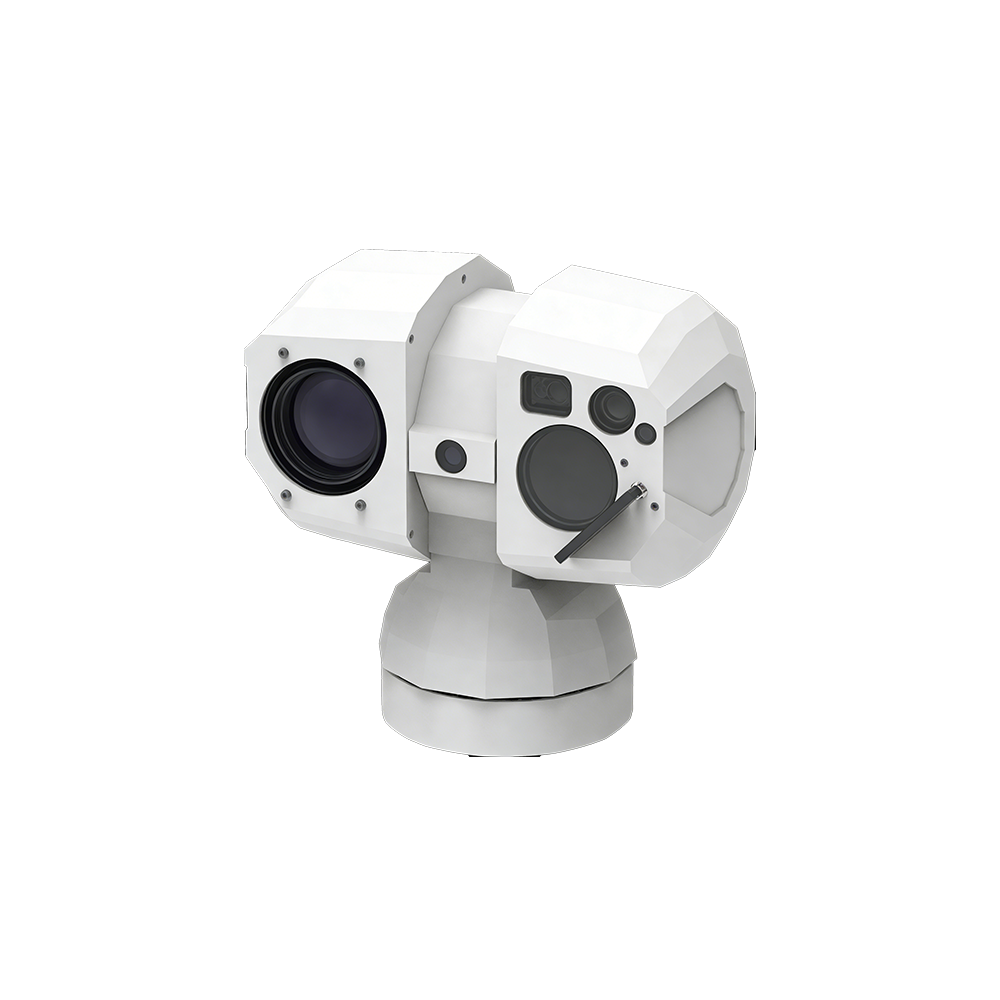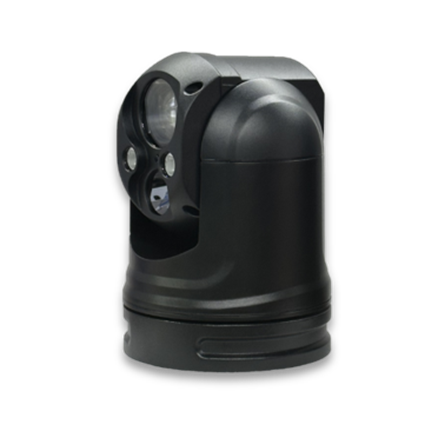
Integrated EO/IR System Solutions
ZanVision's Electro Optical System (EOS) product line delivers multi-sensor imaging payloads that combine visible-spectrum, thermal infrared, and laser ranging capabilities into integrated platforms. These systems are designed for long-range surveillance, target acquisition, and situational awareness across land, maritime, and airborne applications — where a single sensor type cannot provide complete mission coverage.
- Sensor Fusion
- VIS HD/UHD + LWIR Thermal + Laser Rangefinder (LRF)
- Thermal Channel
- 640×512 / 1280×1024 VOx, Continuous Zoom, LWIR 8–14μm
- Visible Channel
- 1920×1080 / 3840×2160 CMOS, 30×–55× Optical Zoom, Day/Night (ICR)
- Laser Rangefinder
- 1535nm Eye-Safe, Range ≥8km, ±1m Accuracy, NMEA 0183 Output
- Gimbal Platform
- Continuous 360° Pan, −90° to +90° Tilt, Gyro-Stabilized
- Onboard Analytics
- Auto Video Tracking, Motion Detection, Geo-Location Overlay
- Interfaces
- Network IP (RTSP), RS-485, plus alarm and audio interfaces
- Deployment
- Coastal/Border Surveillance, Naval ISR, Airborne Gimbal, Critical Infrastructure
The hallmark of the EOS product line is the fusion of complementary sensor modalities: high-resolution visible cameras provide target identification and scene context in daylight; thermal infrared sensors detect and track targets in total darkness, through atmospheric obscurants, and at long range; and integrated laser rangefinders deliver precision distance data for geolocation and fire control. This sensor triad — visible, thermal, laser — forms the foundation of every EOS platform.
Multi-Sensor Architecture
At the core of each EOS payload is a multi-sensor architecture that co-aligns imaging channels on a common optical bench with precision boresight retention:
- Visible-Spectrum Channel: High-definition day cameras with zoom ratios spanning 30× to 100× optical magnification. Sensor resolutions range from 2MP full HD to 8MP 4K, with global shutter variants available for platforms in motion. The visible channel provides the highest spatial resolution for target identification, facial recognition, and evidentiary-quality documentation.
- Thermal Infrared Channel: Uncooled VOx microbolometer detectors in 640×512 or 1280×1024 resolution, paired with continuous-zoom optics covering 5× to 15× zoom ratios. The thermal channel provides 24/7 detection capability regardless of illumination conditions, penetrating atmospheric obscurants including smoke, dust, and light fog that block visible-spectrum sensors.
- Laser Rangefinder (LRF): Eye-safe 1.55μm laser rangefinders with ranging capability from 100m to 20km, depending on model. The LRF provides precision target distance data to within ±1m accuracy, enabling geolocation computation, fire control solutions, and 3D scene reconstruction.
Sensor fusion algorithms running on the on-board processor combine visible and thermal imagery into a unified operator display. Picture-in-picture, split-screen, and blended overlay modes allow the operator to select the optimal fusion mode for the current scene conditions.
PTZ Platforms and Stabilization
EOS payloads are deployed on precision pan-tilt-zoom (PTZ) platforms engineered for continuous 360° azimuth rotation and -90° to +90° elevation coverage. For mobile platforms — vehicles, vessels, and aircraft — gyro-stabilized variants provide active mechanical stabilization, compensating for platform motion to maintain a steady image on target.
Stabilization performance is specified in microradians (μrad) of residual jitter — the remaining angular motion after stabilization correction. Standard vehicle-mounted systems achieve ≤50 μrad stabilization; high-performance naval and airborne systems achieve ≤25 μrad, maintaining stable imagery in Sea State 4 conditions and rotary-wing aircraft vibration environments.
Video Tracking and Analytics
On-board video tracking algorithms enable automatic target following once an operator designates a target in the video frame:
- Centroid Tracking: Locks onto the geometric center of a target blob, suitable for vehicles, vessels, and large thermal signatures.
- Correlation Tracking: Maintains lock using pixel-level template matching, more robust against partial occlusion and target rotation than centroid tracking.
- Scene-Based Motion Detection: Automatically detects and highlights moving targets within the field of view, cueing the operator to potential threats without requiring constant manual scanning.
- Multi-Target Tracking: Simultaneously tracks multiple targets, maintaining individual track IDs and trajectory histories for situational awareness displays.
Integration and Deployment
EOS payloads are designed for integration into broader C4ISR (Command, Control, Communications, Computers, Intelligence, Surveillance, and Reconnaissance) architectures. Standard interfaces include:
- Network: Gigabit Ethernet with RTSP, ONVIF, and proprietary SDK protocols for video streaming, PTZ control, and metadata exchange.
- Serial: RS-232 / RS-422 for integration with legacy command and control systems, radar cueing interfaces, and GPS/INS inputs for geolocation.
- Video: HDMI and 3G-SDI outputs for direct connection to displays, recorders, and video distribution systems.
- Data Protocols: NMEA 0183 for GPS/INS data, KML/KMZ for geolocation export, MISB STANAG 4609 for full-motion video metadata.
Deployment scenarios span coastal and border surveillance (fixed-site towers with 360° coverage), naval vessel situational awareness (gyro-stabilized mast-mounted payloads), airborne ISR (UAV and manned aircraft gimbal payloads), and critical infrastructure protection (multi-sensor perimeter monitoring).

EO/IR Multi-Sensor PTZ Systems