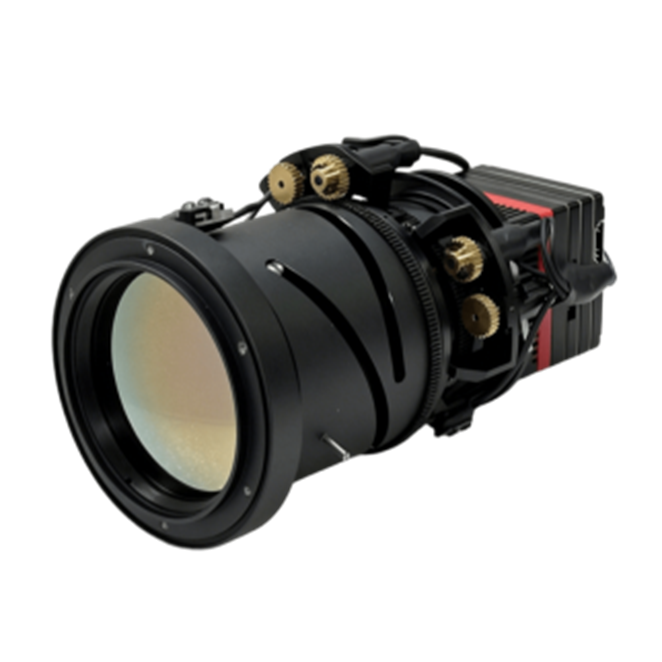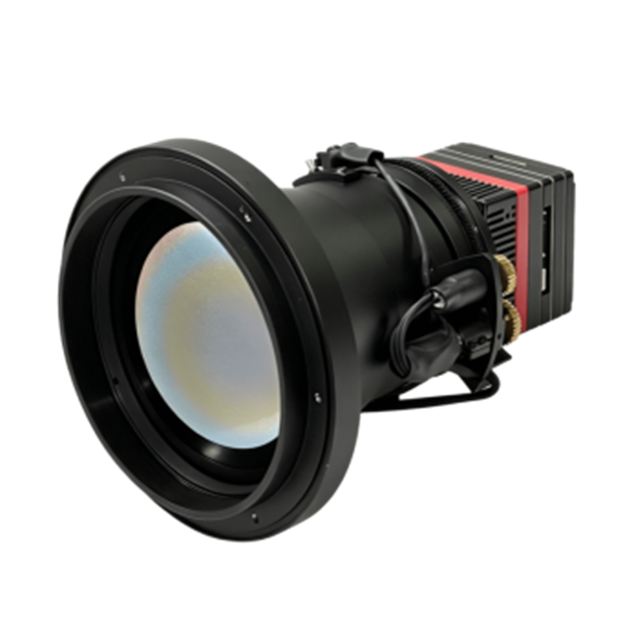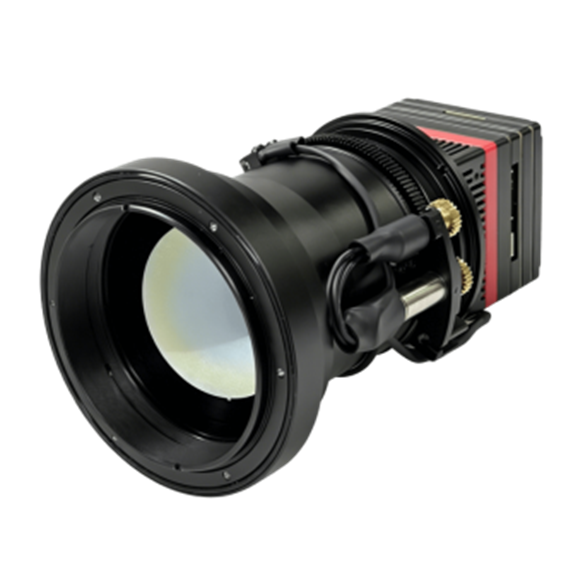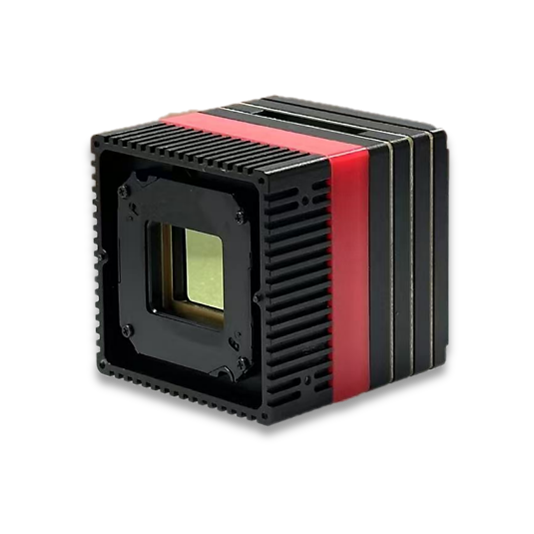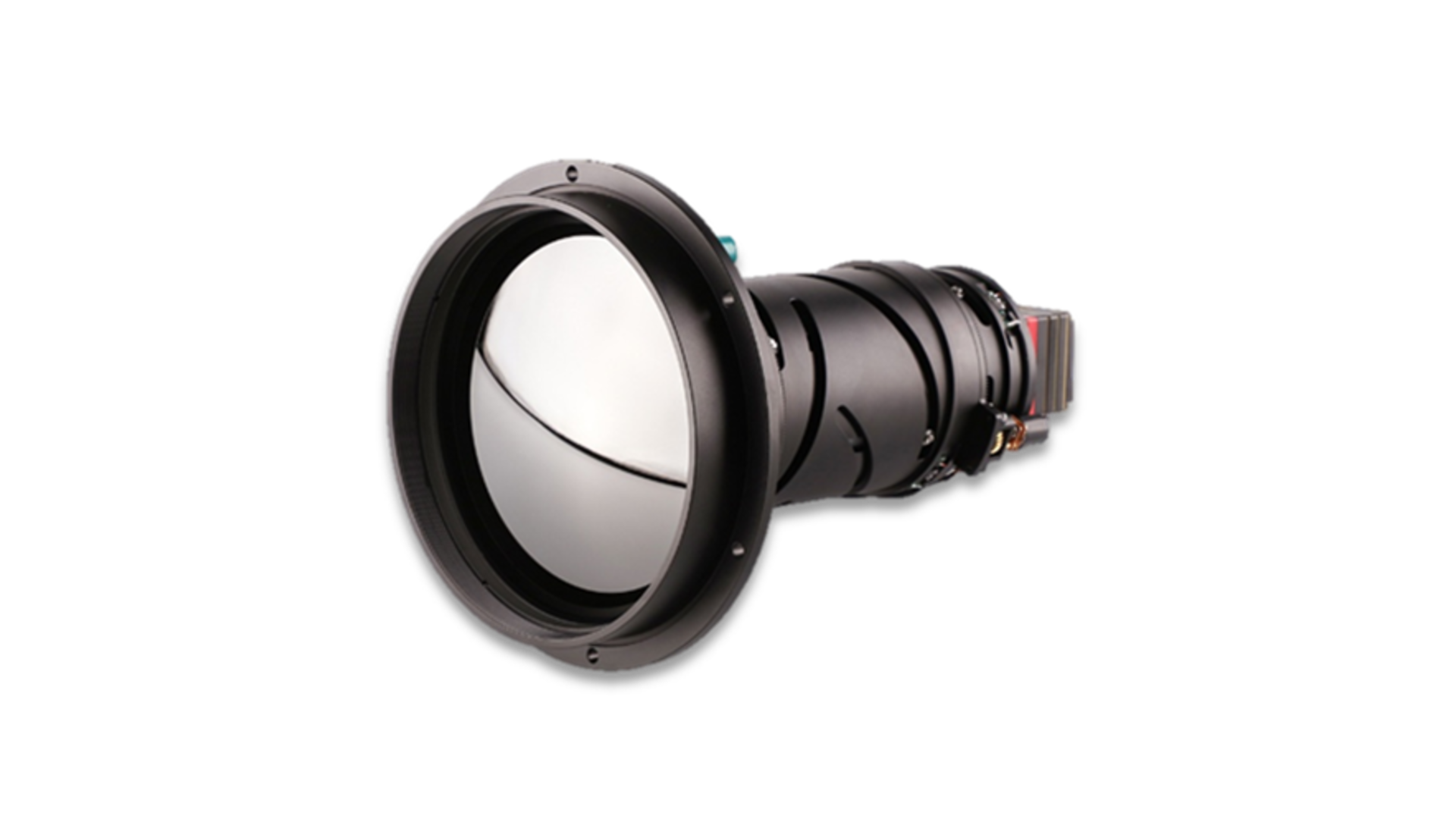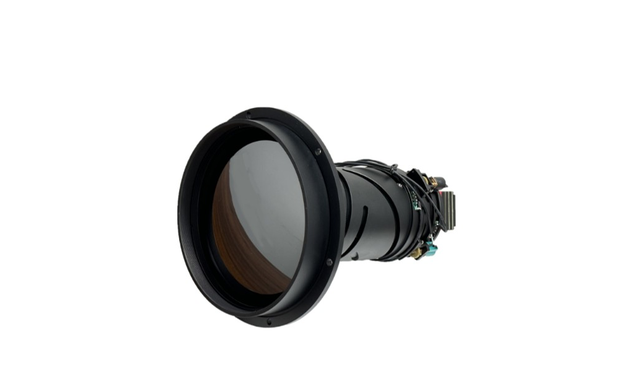
LWIR Thermal Module Portfolio
ZanVision's LWIR thermal module portfolio covers a range of detector resolutions and optical configurations built on uncooled VOx microbolometer technology with high thermal sensitivity. Three resolution tiers are available — 384×288, 640×512, and 1280×1024 — each matched to a distinct operational range.
- Detector Type
- Uncooled VOx (Vanadium Oxide) Microbolometer
- Resolution
- 384×288 / 640×512 / 1280×1024
- Pixel Pitch
- 12μm
- Spectral Band
- LWIR 8–14μm
- NETD
- NETD ≤35mK (f/1.0, 300K)
- Focal Length
- Continuous-Zoom, Athermalized Fixed-Focus, Motorized Focus, Fire-Detection
- Video Output
- Max. 30/25fps @ 1920 × 1080
- Interfaces
- Network IP (RTSP), RS-485, TTL, BT.1120/656, HDMI, CVBS, plus alarm and audio interfaces
The lineup covers four optical configurations. Continuous-zoom modules allow operators to adjust magnification without sacrificing focus — a capability essential for tracking moving targets at varying ranges. Athermalized fixed-focus modules cover a range of focal lengths for SWaP-constrained integration; both germanium-free chalcogenide and traditional optical material options are available depending on the application. Motorized focus modules provide remote focal length adjustment for applications requiring flexible focus control without manual intervention. Purpose-built fire-detection modules embed on-board flame and smoke analytics for early-warning monitoring.
All LWIR thermal modules output Network IP streams with RTSP / ONVIF Profile S / T compliance and ship with an OEM SDK for direct integration into security VMS, industrial inspection, and defense C2 platforms.
Detector Platform and Resolution Architecture
Uncooled VOx Microbolometer Detector Technology
The current generation of uncooled VOx (vanadium oxide) microbolometer detectors offers a measurable SWaP (Size, Weight, and Power) advantage over previous generations. As an infrared camera core, a smaller pixel pitch allows more detector elements to fit on a given die size. Integrators can therefore achieve higher resolution in the same physical package — or maintain the same resolution with a smaller, lighter, lower-power sensor. For UAV and UGV payloads where every gram matters, this directly translates to extended flight time and increased mission payload capacity.
Thermal sensitivity — the minimum temperature difference the sensor can resolve above its noise floor — determines performance in low-contrast thermal scenes. A lower NETD value means better performance when targets are close to ambient temperature (such as vehicles at night, partially concealed personnel, or low-contrast maritime targets against water) — these targets remain distinguishable rather than blending into the background. The impact is most acute when solar loading has equalized — pre-dawn hours, overcast days, and marine environments where target-background temperature contrasts are inherently low. An uncooled thermal camera core with high thermal sensitivity remains viable in the most demanding low-contrast conditions.
Three Resolution Tiers and Application Matching
ZanVision's LWIR thermal module lineup is organized around three detector resolution tiers, each matched to distinct operational requirements:
- 384×288: The entry tier, suited for short-range wide-angle surveillance and cost-sensitive integration projects. The smaller array reduces data bandwidth and processing load, making it practical for compact UAV payloads and high-volume deployment scenarios where per-unit cost is the primary constraint.
- 640×512: The mid-range workhorse. With four times the pixel count of the entry tier, this resolution supports longer-range detection and finer target discrimination. It balances thermal imaging performance with manageable data throughput, making it the preferred choice for standard fixed-site perimeter surveillance, vehicle-mounted observation systems, and medium-range maritime monitoring.
- 1280×1024: The high-end flagship resolution, delivering over four times the detail of the 640×512 tier. This resolution tier targets long-range wide-area surveillance where identifying targets at extended distances is the primary metric. Large-aperture optics paired with high-resolution sensors form the core of strategic border control, coastal surveillance, and critical infrastructure protection systems.
Optical Configurations
Continuous-Zoom Optics
Continuous-zoom thermal modules provide seamless focal length adjustment across a defined zoom range without losing focus — a capability essential for tracking moving targets whose distance changes dynamically. These modules maintain parfocal characteristics throughout the zoom range, meaning the focus point remains stable as the focal length changes. This is critical for mission scenarios where the operator needs to switch between wide-area scanning and detailed target identification without manual refocusing.
ZanVision offers continuous-zoom configurations matched to resolution tiers. For 640×512 detectors, zoom ratios of 5× to 10× are standard, covering focal length ranges such as 30–150mm or 20–200mm. For 1280×1024 detectors, zoom ratios extend to 15× and beyond, with focal lengths reaching 300mm or more — enabling human-sized target detection beyond 10km under favorable atmospheric conditions.
Athermalized Fixed-Focus Optics
Athermalized fixed-focus modules are designed for SWaP-constrained integration where size, weight, and power consumption are primary considerations. The athermalization process compensates for optical performance drift caused by ambient temperature variation, ensuring consistent image quality across the module's rated operating temperature range (typically -40°C to +70°C) without active thermal management.
Both germanium-free chalcogenide glass optics and traditional germanium-based options are available. Chalcogenide glasses offer a lower temperature coefficient of refractive index (dn/dT), reducing thermal defocus without the cost and complexity of mechanical athermalization. This makes them particularly attractive for high-volume OEM programs and applications where maintenance access is limited.
Motorized Focus Modules
Motorized focus thermal modules provide remote focal length adjustment via network command or serial control protocol. Unlike continuous-zoom modules which vary both field of view and magnification, motorized focus modules are designed for fixed-field-of-view applications where occasional focus adjustment is needed — such as when a camera is initially installed at an unknown target distance, or when the scene temperature changes significantly between day and night operation. Focus adjustment speed and precision are specified per module, with typical full-range travel times under 5 seconds.
Fire-Detection Modules
Purpose-built fire-detection thermal modules embed on-board flame and smoke detection analytics that operate directly on the thermal video stream before encoding. This edge-computing approach eliminates the latency and bandwidth overhead of server-side analytics. The modules detect flame signatures based on thermal intensity patterns and temporal flicker characteristics, while smoke detection leverages the obscuration of background thermal radiation. Configurable alarm zones and sensitivity thresholds allow integration into both indoor industrial monitoring (warehouses, manufacturing floors) and outdoor wildfire early-warning systems across large coverage areas.
OEM Integration Interfaces
All LWIR thermal modules output Network IP streams with RTSP and ONVIF Profile S / T compliance, ensuring plug-and-play compatibility with major VMS platforms including Milestone, Genetec, and Avigilon. For deeper integration, the OEM SDK provides direct access to video frames in raw or compressed format, detector configuration parameters (integration time, gain, NUC tables, polarity), and serial communication protocols for gimbal/PTZ control. Hardware interfaces include Ethernet (10/100/1000 Mbps), RS-485/RS-232 for serial control, and GPIO for alarm I/O. Power-over-Ethernet (PoE 802.3af/at) is standard on most models, simplifying cabling for fixed installations.
Selecting the Right LWIR Module
Module selection starts with defining the primary mission requirement — is it maximum detection range, highest resolution, smallest SWaP, or lowest cost? Once the priority is clear, the resolution tier and optical configuration fall into place:
- For short-range wide-angle surveillance (perimeter monitoring, indoor industrial, compact drones): choose 384×288 with athermalized fixed-focus optics.
- For medium-range target tracking (vehicle-mounted, maritime, standard fixed-site): choose 640×512 with continuous-zoom optics in the 5× to 10× zoom range.
- For long-range wide-area surveillance (border control, coastal monitoring, critical infrastructure): choose 1280×1024 with continuous-zoom optics in the 15×+ zoom range.
- For early-warning fire detection: choose a fire-detection module with on-board analytics, matched to the coverage area and desired detection sensitivity.
All modules can be customized at the OEM level — lens selection, housing material and IP rating, connector type, and firmware feature set are configurable per project. Contact ZanVision with your specific integration requirements for a tailored recommendation.

LWIR Thermal Camera Modules