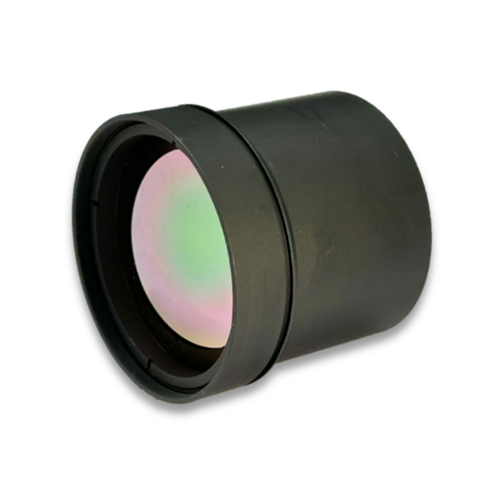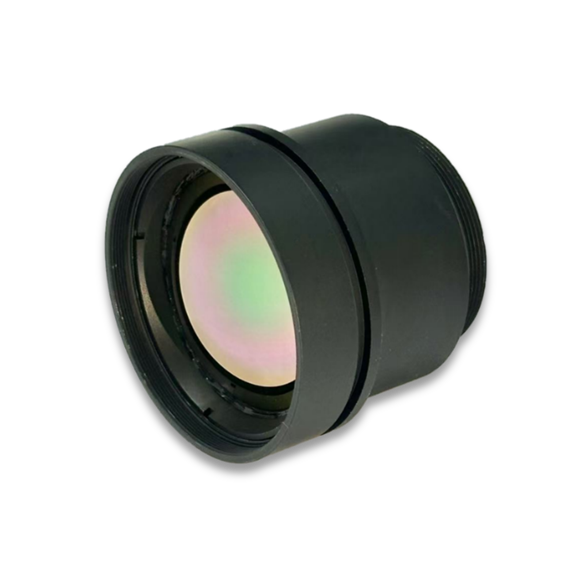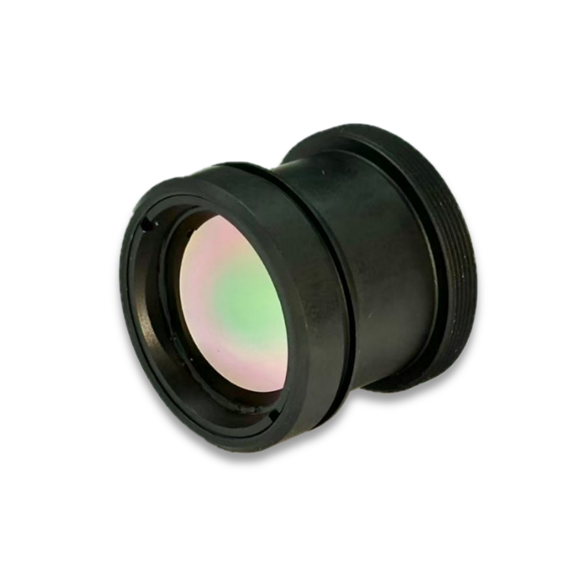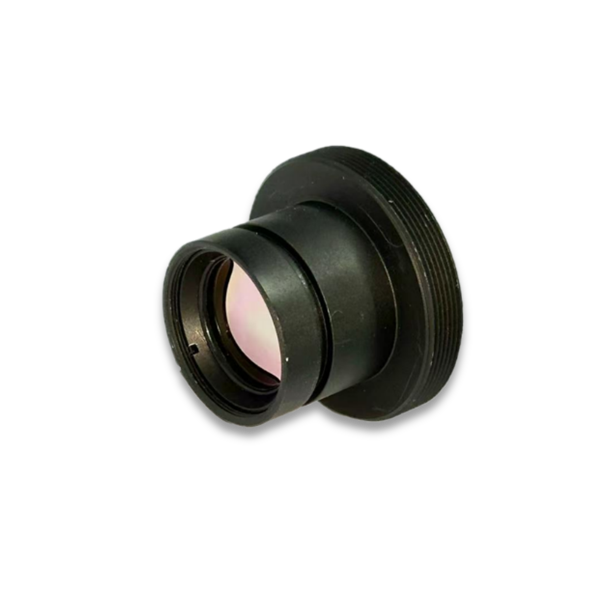
ZV-LAF19W62-M34 | 19mm F1.0 Athermalized LWIR Lens | 640x512 12um Uncooled VOx | Germanium-Free Export Design
Product Overview
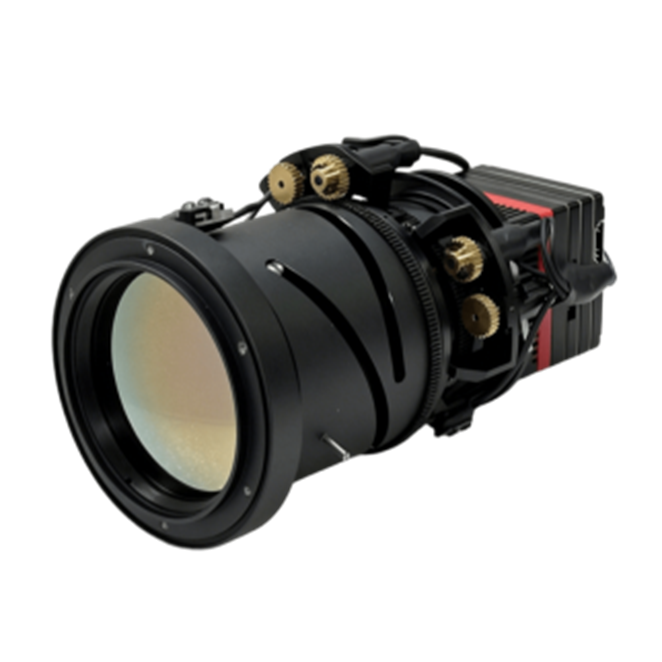
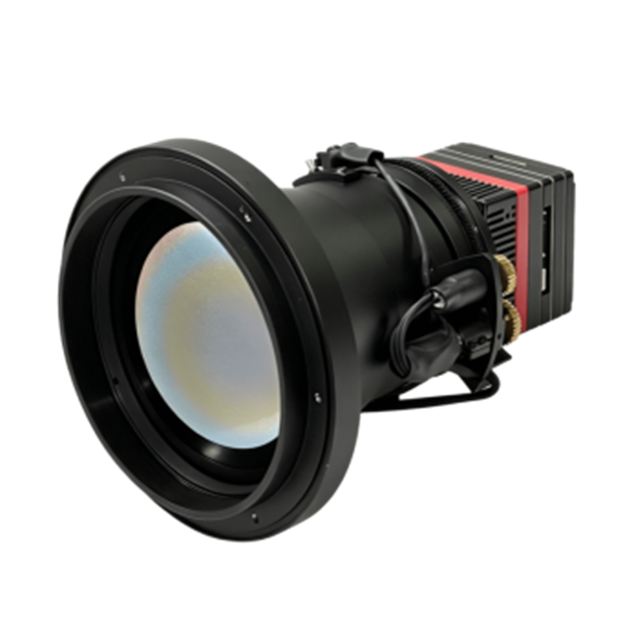
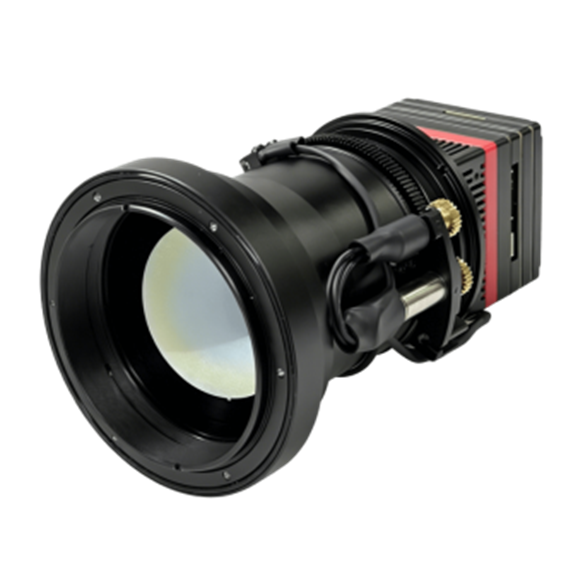
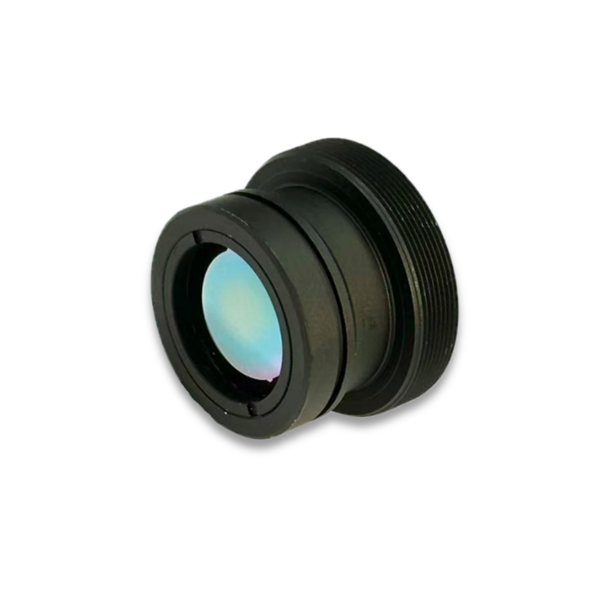
The ZV-LAF19W62-M34 is a 19mm F1.0 athermalized LWIR lens engineered as the versatile mid-field option in ZanVision's germanium-free lens portfolio. Optimized for 640x512 12um uncooled microbolometer detectors, it strikes the optimal balance between field of view (23.5 degrees horizontal) and recognition range. This "Goldilocks" focal length is the most popular choice among system integrators who need to cover both wide-area detection and mid-range identification from a single camera position.
Key Advantages
Optimal FOV-to-Range Ratio: 23.5-degree HFOV paired with DRI ranges of approximately 3.4km detection / 860m recognition / 430m identification (human, EN IEC 62676-4:2025). This is the most versatile lens in the lineup for multi-role EO/IR systems.
Germanium-Free & Export-Ready: Eliminates ITAR/EAR compliance overhead. No germanium supply chain dependencies, enabling consistent delivery schedules for volume OEM programs.
Athermalized Design: Maintains diffraction-limited performance without active focus adjustment from -40C to +80C. Eliminates focus motor complexity and power consumption from your system design.
F1.0 Speed: Collects 44% more photons than F1.2 alternatives, providing meaningful NETD improvement in low thermal contrast conditions typical of dawn/dusk operations.
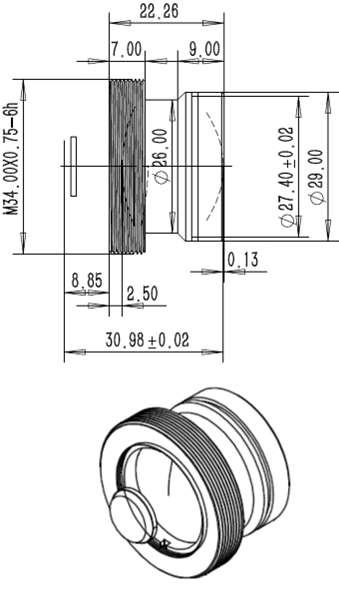
M34x0.5 Interface: Drop-in compatible with standard 640x512 12um detector cores. Simple mechanical integration with standard lens mounts.
Ideal Applications
Mid-Range PTZ & Gimbal Systems: The 19mm focal length is the workhorse choice for pan-tilt-zoom platforms covering perimeters up to 2km. Wide enough for search, long enough for classification.
Border & Coastal Surveillance: Day/night monitoring of borders, coastlines, and critical infrastructure corridors where targets may appear at varying distances.
Counter-UAS (C-UAS) Detection: The balanced FOV supports drone detection systems that need to scan sky volumes while maintaining sufficient resolution for classification at typical drone operating ranges.
Multi-Sensor EO/IR Payloads: Pairs effectively with visible and SWIR cameras in multi-spectral gimbal systems where the thermal channel provides the primary detection capability.